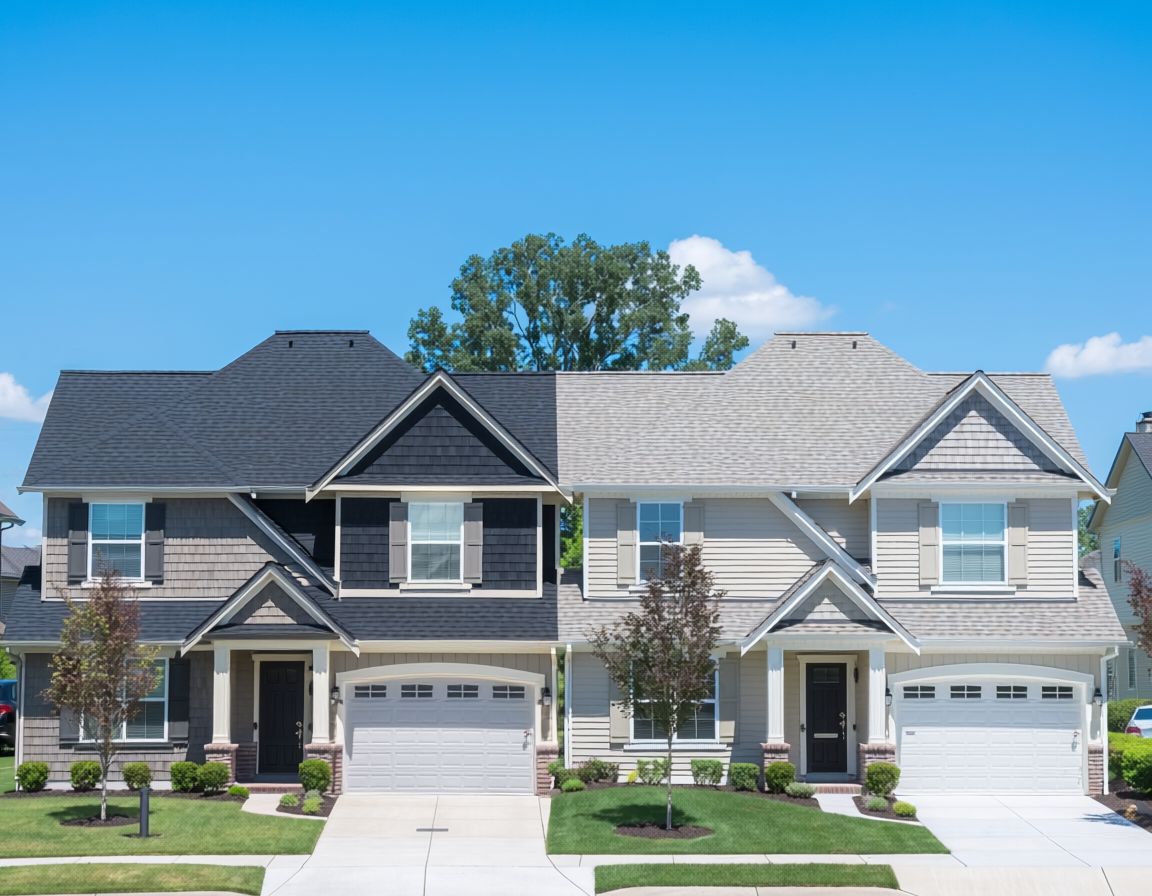
The color of your roof shingles affects more than curb appeal — it changes how much heat your attic absorbs, how hard your cooling system works, how fast snow melts, and how your home looks from the street. Dark shingles absorb solar energy and transfer it into your home. Light shingles reflect it away. Neither one is universally better — the right choice depends on your climate, your home’s insulation, your roof’s orientation, and what matters most to you. After installing roofs across the Twin Cities in every color from weathered wood to charcoal to pewter gray, here’s what we’ve learned about how shingle color actually performs in the real world.
The Science of Shingle Color: Heat Absorption vs. Reflection
At its core, the interaction between roof shingles and sunlight boils down to basic physics: darker colors absorb more solar energy, converting it into heat, while lighter shades reflect it away. Think of it like wearing a black shirt versus a white one on a sunny day—the black garment traps warmth against your skin, making you feel hotter, whereas the white bounces light back, keeping you cooler. Applied to roofing, this principle means dark shingles (like charcoal, deep brown, or black) can elevate your roof’s surface temperature by as much as 50-90 degrees Fahrenheit compared to light ones on peak sunny days.
This heat transfer doesn’t stop at the roof; it permeates downward, warming attics and upper living areas. In turn, your air conditioning kicks into overdrive to maintain indoor comfort, potentially straining the system and leading to higher operational demands. Conversely, light shingles (such as beige, white, or pale gray) act as a natural barrier, deflecting up to 60-90% of sunlight depending on their reflective properties. This reflection reduces the thermal load on your home, allowing cooling systems to run more efficiently and less frequently.
But here’s a twist often overlooked: not all shingles are created equal in their reflective capabilities. Modern advancements have introduced “cool roof” technologies, where even darker-toned shingles incorporate special pigments or coatings that mimic the reflective qualities of lighter colors. These innovations scatter infrared rays—the invisible heat carriers in sunlight—without altering the visible appearance. For homeowners eyeing energy optimization, exploring these hybrid options can bridge the gap between aesthetic preferences and practical efficiency, ensuring your roof contributes to a balanced indoor environment year-round.
| Feature | Dark Shingles | Light Shingles |
|---|---|---|
| Heat Absorption | High — absorbs 70-90% of solar energy | Low — reflects 60-90% of solar energy |
| Roof Surface Temp (Summer) | 50-90°F hotter than ambient air | 10-25°F above ambient air |
| Cooling Cost Impact | Can increase cooling costs 10-20% | Reduces cooling demand noticeably |
| Heating Benefit | Absorbs passive solar heat in winter | Minimal heating benefit |
| Snow Melt | Faster — heat absorption accelerates melting | Slower — less heat to melt accumulation |
| Dirt/Algae Visibility | Hides stains and discoloration better | Shows dirt, algae, and staining more |
| Curb Appeal | Bold, dramatic, classic look | Clean, modern, bright appearance |
| Best Home Styles | Colonial, Craftsman, farmhouse, brick exteriors | Coastal, Mediterranean, light siding |
| UV Degradation | May show UV wear slightly faster | Tends to show less visible UV aging |
| Cool Roof Options | Available — infrared-reflective dark pigments | Naturally meets cool roof standards |
| Best Climate Fit | Cold climates with long winters | Warm climates with hot summers |

Weighing the Pros and Cons: Dark Shingles in the Spotlight
Dark shingles have long been a favorite for their sophisticated, timeless appeal, blending seamlessly with a variety of architectural styles from colonial to contemporary. They create a striking contrast against lighter siding or landscaping, enhancing curb appeal and potentially boosting your home’s visual impact in the neighborhood. From an energy standpoint, in regions with cooler seasons, dark shingles excel by absorbing solar heat during shorter daylight hours, which can passively warm your home and ease the burden on heating systems.
However, when it comes to cooling costs specifically, dark shingles present a challenge in warmer weather. Their heat-absorbing nature can lead to elevated attic temperatures—sometimes reaching 150 degrees or more—which radiates into living spaces. This phenomenon, known as the “heat island effect” on a micro scale, forces cooling units to compensate, potentially increasing energy consumption by 10-20% in peak summer months based on various studies. Yet, this isn’t a deal-breaker; proper attic ventilation, insulation upgrades, and strategic tree shading can mitigate these effects, turning a potential drawback into a manageable aspect.
Professional contractors play a crucial role here, assessing your home’s specific setup to recommend enhancements that counteract heat buildup. For instance, installing ridge vents or radiant barriers during a roof replacement can channel hot air out efficiently, allowing dark shingles to shine in both form and function. By consulting experts early, you ensure that your choice of dark shingles doesn’t inadvertently hike up cooling demands but instead integrates into a holistic energy strategy tailored to your property.
The Bright Side: Advantages of Light-Colored Shingles
Light-colored shingles flip the script by prioritizing reflection over absorption, making them a powerhouse for cooling efficiency in sun-drenched environments. Their ability to repel solar rays keeps roof surfaces significantly cooler—often 20-40 degrees lower than dark counterparts—translating to reduced heat transfer indoors. This can lighten the load on your HVAC system, promoting longer equipment life and smoother operation during heatwaves.
Beyond cooling, light shingles contribute to broader environmental benefits, such as reducing urban heat islands in densely populated areas by lowering overall ambient temperatures. They also align well with energy certification programs like ENERGY STAR, which recognize roofs that meet high reflectivity standards for potential rebates or incentives. Aesthetically, light shingles offer a clean, modern vibe that complements minimalist designs or homes in sunny locales, and they tend to show less visible wear from UV exposure over time.
That said, in areas with heavy snowfall or prolonged cold spells, light shingles might not capture as much passive solar heat, potentially shifting more reliance to active heating. But again, this is where innovation steps in—many light shingles now feature enhanced durability coatings that resist algae and staining, maintaining their reflective prowess for decades. Engaging a seasoned contractor ensures these materials are installed with precision, incorporating underlayments and flashing that seal out moisture while optimizing airflow. Their expertise transforms a simple color choice into a comprehensive system that actively supports lower cooling needs and enhanced home comfort.
Key Factors Influencing Your Choice: Beyond Just Color
Choosing between dark and light shingles for cooling optimization isn’t solely about hue—several interconnected factors deserve consideration to ensure the best fit for your home. Climate is paramount: In consistently warm zones, light shingles’ reflective edge can yield noticeable efficiency gains, while mixed climates might benefit from the balanced heat management of dark options with added insulation. Your home’s orientation matters too; south-facing roofs endure more direct sun, amplifying the benefits of lighter colors, whereas shaded or north-facing ones might tolerate darker shades without significant cooling penalties.
Roof pitch and material type add layers to the decision. Steeper slopes shed heat faster, giving more leeway for darker choices, while flat or low-slope roofs amplify heat retention, favoring lights. Asphalt shingles, the most common type, vary in their solar reflectance index (SRI)—a metric combining reflectivity and emissivity— so opting for higher SRI ratings regardless of color can boost performance. Metal or tile alternatives, often available in both palettes, bring their own efficiency perks, like innate reflectivity in metals.
Home design and personal preferences shouldn’t be sidelined either. Dark shingles might enhance a rustic farmhouse aesthetic, while lights suit coastal or Mediterranean styles. Energy audits can provide data-driven insights, revealing how your current setup performs and what color shift could achieve. Ultimately, collaborating with roofing professionals demystifies these variables. They conduct site-specific evaluations, factoring in your roof’s age, ventilation, and insulation to recommend a color that aligns with cooling goals. Their hands-on experience ensures installations that not only look great but perform optimally, preventing common pitfalls like improper sealing that could undermine efficiency gains.
Modern Innovations: Bridging the Gap Between Style and Efficiency
The roofing industry has evolved dramatically, offering solutions that let homeowners have the best of both worlds. Enter cool-colored shingles: These use advanced granule technology to reflect infrared light while appearing dark to the eye. For example, pigments that scatter heat without fading allow for charcoal or espresso tones that perform nearly as well as whites in cooling tests. This means you can maintain that bold, dramatic roofline without sacrificing energy savings.
Reflective underlayments and coatings applied during installation further enhance any color’s efficiency. These barriers block radiant heat from entering the attic, complementing your shingle choice. Solar-integrated options, like photovoltaic shingles in light or dark finishes, generate energy while managing temperature, turning your roof into an active contributor to home efficiency.
Contractors specializing in these technologies are invaluable, guiding you through certifications and warranties that back these innovations. They ensure proper integration with existing systems, like attic fans or smart thermostats, for a synergistic effect that minimizes cooling demands. By leveraging their knowledge, your roof becomes a forward-thinking asset, blending timeless appeal with cutting-edge performance.

Cool Roof Shingles — Dark Colors That Reflect Like Light
If you want a dark roof but worry about heat absorption, cool roof technology closes the gap. Manufacturers like GAF and Owens Corning produce shingles with special infrared-reflective granules that scatter heat-carrying wavelengths while maintaining a dark visual appearance. A charcoal cool-roof shingle can reflect nearly as much infrared energy as a standard light gray — you get the look you want without the thermal penalty.
GAF’s Timberline Cool Series and similar products from other manufacturers meet ENERGY STAR cool roof requirements even in darker colors. The cost premium is modest — typically a few hundred dollars more on a full roof project — and can be worth it for homes with limited insulation or south-facing slopes that take heavy sun exposure.
We install cool roof shingles regularly and recommend them when a homeowner wants a dark aesthetic but has thermal concerns. It’s one of those products where the technology genuinely delivers on the promise.
Maintenance and Longevity: Ensuring Lasting Cooling Benefits
No matter the color, a roof’s efficiency hinges on upkeep. Light shingles might require occasional cleaning to maintain reflectivity, as dirt accumulation can dull their edge, while dark ones benefit from algae-resistant treatments to preserve appearance and function. Regular inspections catch granule loss or cracking early, preventing heat-trapping vulnerabilities.
Professional maintenance plans keep these aspects in check, with experts using tools like infrared scans to detect hot spots invisible to the untrained eye. They also advise on complementary upgrades, such as improved insulation, that amplify your color choice’s impact on cooling.
What Matters More Than Shingle Color
Shingle color gets a lot of attention in this debate, but three other factors have a bigger impact on your home’s temperature and energy performance:
Attic insulation. If your attic insulation is at R-49 or above — which is the current Minnesota code recommendation — the heat transfer from dark shingles is dramatically reduced. A well-insulated attic acts as a thermal barrier that minimizes the impact of roof surface temperature on your living space. Most homes we work on in the Twin Cities are under-insulated, and adding insulation delivers more energy savings than switching shingle color ever would.
Ventilation. Balanced intake and exhaust ventilation moves hot air out of the attic before it can radiate into your living space. Ridge vents, soffit vents, and in some cases powered attic fans keep attic temperatures closer to outdoor ambient regardless of shingle color. During every roof replacement, we check ventilation and correct it if it’s inadequate — it’s one of the most overlooked factors in roof performance.
Radiant barrier. A reflective radiant barrier installed on the underside of your roof deck blocks up to 97% of radiant heat transfer into the attic. This is the single most effective way to reduce heat gain from any color shingle. It’s relatively inexpensive to add during a roof replacement and works year-round.
Bottom line: if energy efficiency is your primary concern, spend your money on insulation and ventilation first. Pick the shingle color you love, then make sure the system underneath handles the thermal performance.
What Works Best in Minnesota
Minnesota throws a curveball at this debate because we have both extremes — brutal winters where passive solar heat matters and hot summers where attic temperatures can spike. So which color wins here?
The honest answer is that insulation and ventilation matter more than shingle color in Minnesota. A properly insulated attic with balanced soffit-to-ridge ventilation will regulate temperature regardless of whether your shingles are charcoal or pewter gray. We’ve installed thousands of roofs in both dark and light colors across Minneapolis, St Paul, Woodbury, and Minnetonka, and the homes that perform best are the ones with R-49+ attic insulation and adequate airflow — not necessarily the ones with the lightest shingles.
That said, there are some real-world observations worth noting. Dark shingles do melt snow faster in Minnesota, which can help reduce ice dam risk in spring by clearing accumulation sooner. But if your attic isn’t insulated properly, that same heat absorption can actually make ice dams worse by melting snow on the upper roof while the eaves stay frozen. The fix isn’t shingle color — it’s insulation and ventilation.
For homes with south-facing roof slopes that get intense direct sun in summer, lighter shingles can reduce attic temperatures by 20-40°F compared to dark. That’s meaningful if your upstairs bedrooms sit directly below the roofline. For homes with heavy tree coverage or north-facing slopes, the color difference is much less impactful.
Our recommendation for most Minnesota homes: choose the color you like. Then invest in proper insulation and ventilation to make sure the house performs well regardless. If you’re torn between two similar shades, lean lighter on south-facing slopes and darker on north-facing — but don’t compromise on a color you’ll look at every day for 25 years because of a marginal energy difference that insulation can handle.
Making the Right Call for Your Home
The verdict on dark versus light shingles for cooling costs? It depends on your unique circumstances, but light options generally edge out in warmer scenarios for their reflective prowess, while darks offer versatility with modern tweaks. Whichever path you take, the key to unlocking true efficiency lies in professional execution—from selection to installation.
For homeowners in Minnesota, particularly in the Minneapolis-St. Paul Greater metropolitan area, where summers bring intense heat spells amid variable weather, tailoring your roof color to local conditions can make a real difference. If you’re contemplating a roof upgrade to optimize cooling and overall performance, consider partnering with Presidential Construction. Located in Maple Grove, our team brings deep expertise to help you navigate these choices and deliver installations that stand strong. Reach out at (651) 766-3464 to discuss how we can support your project and elevate your home’s efficiency today.
Shingle Colors Common Questions
Do dark shingles make your house hotter?
They increase roof surface temperature and can raise attic temperatures by 10-15°F compared to light shingles on a sunny day. Whether that makes your living space noticeably hotter depends on your attic insulation and ventilation. A well-insulated home with proper airflow will feel comfortable regardless of shingle color. A poorly insulated one will feel warmer upstairs with dark shingles during summer.
Do light shingles save money on cooling?
They can. Studies suggest light shingles reduce cooling costs by 10-20% in warm climates. In Minnesota, where our cooling season is shorter than our heating season, the savings are more modest. Insulation quality has a bigger impact on year-round energy costs than shingle color alone.
Do dark shingles help melt snow faster?
Yes. Dark shingles absorb more solar energy, which warms the roof surface and accelerates snow melt. This can help clear accumulation faster after a storm. However, if your attic isn’t properly insulated, that same heat absorption can contribute to ice dam formation by melting snow unevenly. Insulation and ventilation are still the primary ice dam prevention tools.
Does shingle color affect how long the roof lasts?
Not significantly. There’s no reliable data showing that one color lasts meaningfully longer than the other. What affects lifespan far more is the quality of the shingle product, proper installation, adequate ventilation, and regular maintenance. Both dark and light architectural shingles from manufacturers like GAF and Owens Corning carry 25-30 year warranties regardless of color.
What shingle color is best for Minnesota?
There’s no single best color for Minnesota because we have both hot summers and cold winters. The most important thing is proper insulation and ventilation underneath — those handle thermal performance in both seasons. Choose the color that looks best on your home and matches your architecture. If you’re torn, a medium tone like weathered wood or pewter gray offers a balanced look that neither absorbs extreme heat nor reflects winter warmth away.
Can I get dark shingles that don’t absorb as much heat?
Yes. Cool roof shingles use infrared-reflective granules that scatter heat while maintaining a dark appearance. Products like GAF’s Timberline Cool Series look dark to the eye but reflect significantly more solar energy than standard dark shingles. The cost premium is small and the performance difference is real.
Does roof color affect home resale value?
Roof color doesn’t directly affect appraised value, but it significantly affects curb appeal — which influences how quickly a home sells and how buyers perceive it. A roof color that complements the home’s siding, trim, and architecture looks intentional and well-maintained. A mismatched color can make an otherwise nice home look off. Choose a color that works with your exterior, and the value takes care of itself.