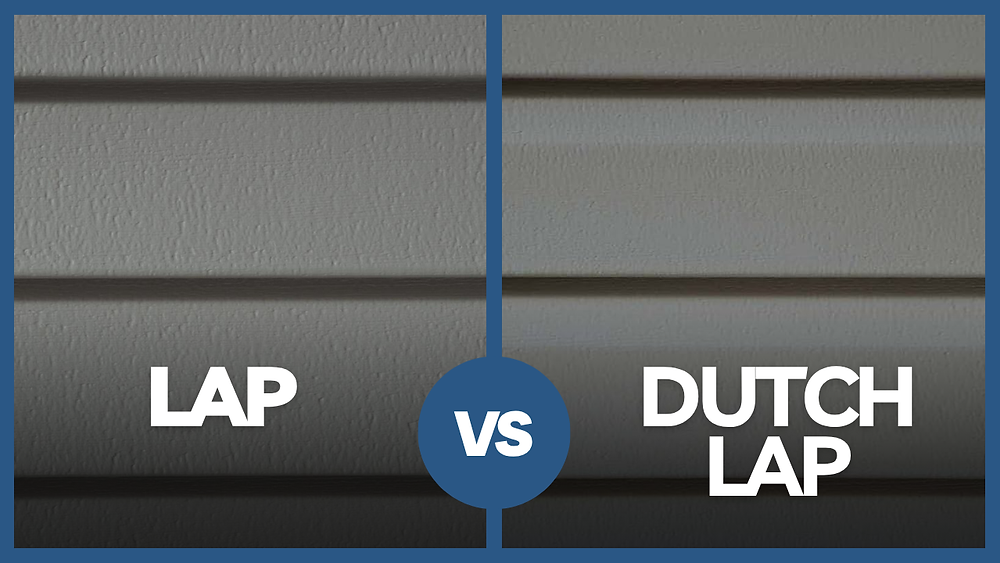
If you’re replacing your siding and someone’s asked whether you want Dutch lap or clapboard, you’re not alone in wondering what the difference actually is. Both are horizontal lap siding. Both overlap. Both shed water. The difference comes down to one thing — the profile at the top of each board. Dutch lap has a concave bevel that creates a shadow line between courses, giving the facade more depth and dimension. Clapboard is flat and tapered, producing clean, simple lines. That single design difference affects how your home looks, which architectural styles it complements, and in some cases, how it performs in weather. Here’s a contractor’s breakdown of both.
In this breakdown, we’ll compare Dutch lap and clapboard siding side by side — covering appearance, cost, durability, weather performance, and which home styles each one suits best. Everything here comes from what we’ve seen installing both profiles on homes across the Twin Cities. By the end, you’ll have a clear picture of which one fits your project and why getting the installation right matters as much as the profile you choose.
What Is Dutch Lap Siding?
Dutch lap siding, also known as cove lap or German lap, features horizontal boards with a notched or beveled edge that creates a subtle shadow line where panels overlap. This design gives the appearance of a slight curve or recess, adding depth and texture to the facade without overwhelming it. Originating from European influences and popularized in colonial American homes, Dutch lap is typically made from wood, vinyl, fiber cement, or engineered composites, allowing for versatility in materials.
The overlapping profile not only enhances visual interest but also improves water resistance by directing runoff away from seams. Homeowners often choose Dutch lap for its ability to mimic traditional wood siding while accommodating modern manufacturing for easier upkeep. It’s commonly seen on Cape Cod, colonial, or Victorian-style houses, where the gentle contour complements ornate details or simple lines alike.

Pros of Dutch Lap Siding
Dutch lap siding brings several compelling benefits to residential exteriors, making it a popular choice for those seeking a balance of style and substance. Its distinctive shadow lines create a sense of dimension, elevating plain walls into eye-catching features. This added texture can make homes appear more substantial and inviting, particularly in neighborhoods where architectural variety stands out.
Durability is a key strength; the beveled overlaps provide superior weather protection, reducing the likelihood of wind-driven rain penetrating joints. Materials like fiber cement or composites, as noted in discussions on siding durability, resist rotting, warping, and insect damage, ensuring longevity in diverse climates. Homeowners appreciate the low-maintenance aspect—vinyl or pre-finished versions require minimal painting or sealing, saving time and effort over the years.
Dutch lap gives you a lot of flexibility with color. Lighter shades like white, gray, and blue highlight the shadow lines between courses, while bolder colors can give a more modern feel depending on the architecture. The natural wood grain texture in engineered wood versions adds warmth without needing stain. Installation is straightforward for experienced crews — the lap design allows for secure fastening that minimizes visible nails and produces a clean, polished finish.
The tight overlaps also contribute to energy performance. The beveled profile creates a snugger connection between courses than flat siding, reducing air infiltration along the wall surface. That tighter seal supports more consistent indoor temperatures and can take some load off your heating and cooling system. We often recommend Dutch lap for homes that need subtle elegance — the profile hides minor wall imperfections better than flat clapboard, which means a smoother finished appearance even on older homes that aren’t perfectly plumb.
Cons of Dutch Lap Siding
Despite its appeals, Dutch lap siding has some drawbacks to consider. The beveled edges can accumulate dirt or pollen more readily than flat profiles, potentially requiring more frequent cleaning in dusty or tree-heavy areas. In very humid environments, if not properly ventilated during installation, moisture could trap behind panels, though quality materials mitigate this.
Cost can be a factor; premium fiber cement or wood versions are pricier than basic vinyl clapboard, reflecting the added manufacturing for the lap detail. Installation demands precision—the notches must align perfectly to avoid gaps or uneven shadows, which underscores the need for experienced contractors to prevent aesthetic or functional issues.
In extreme weather, like high winds, the profiled edges might experience more stress, though reinforced options handle this well. Compared to smoother sidings, Dutch lap’s texture might not suit ultra-minimalist designs, potentially clashing with sleek modern homes unless customized thoughtfully.
What Is Clapboard Siding?
Clapboard siding, often referred to as bevel siding, consists of long, horizontal planks that taper from a thicker bottom to a thinner top, overlapping to create a flat, seamless appearance. This style traces back to early American settlers, who used it for its simplicity and effectiveness in shedding water. Made from similar materials as Dutch lap—wood, vinyl, engineered wood, or fiber cement—clapboard provides a straightforward, classic profile that’s easy to recognize on traditional homes.
The clean lines of clapboard emphasize width, making houses appear broader and more grounded. It’s a staple on New England saltboxes, farmhouses, and contemporary builds seeking understated elegance. The overlapping design ensures excellent weatherproofing, with each board channeling water downward away from the structure.

Pros of Clapboard Siding
Clapboard siding shines in its simplicity and reliability, offering pros that appeal to a wide range of homeowners. Its flat profile creates a smooth, uniform look that’s versatile across architectural styles, from colonial revivals to modern ranches. This clean aesthetic allows for easy color changes, enabling homeowners to refresh their exterior without altering the siding’s inherent charm.
Protection is paramount; the beveled taper excels at diverting rain and snow, reducing moisture risks that could lead to mold or decay. Engineered wood or composite versions, with their pros like pest resistance as detailed in material overviews, provide robust defense against elements, extending the siding’s lifespan. Maintenance is straightforward—regular washing suffices for most, and the lack of deep contours means less buildup of grime.
Clapboard’s clean horizontal lines create a balanced, symmetrical appearance that works across a wide range of home styles — from historic colonials to modern builds. The flat profile lets the architecture and color do the talking without competing for attention. It’s also more budget-friendly than profiled alternatives, which makes it a practical choice for larger projects where material and labor costs add up quickly. Contractors favor clapboard for its forgiving installation — the basic flat overlap accommodates minor wall irregularities without creating visible alignment issues, which means efficient, cost-effective applications even on older homes where the framing isn’t perfectly straight.
In terms of resale value, as explored in siding’s market impact, clapboard’s timeless appeal attracts buyers seeking low-fuss exteriors, potentially speeding sales by evoking familiarity and quality.
Cons of Clapboard Siding
Clapboard isn’t without limitations. Its flat design can appear plain compared to textured options, potentially lacking the visual depth some homeowners desire for added character. In areas with heavy snowfall, ice dams might form along overlaps if not properly insulated, though flashing resolves this.
Wood clapboard requires periodic painting or staining to prevent fading or cracking, increasing long-term upkeep compared to vinyl alternatives. Installation must ensure consistent spacing to avoid warping over time, emphasizing professional expertise to maintain alignment.
In high-wind zones, the simpler profile might not interlock as tightly as more contoured sidings, though modern fasteners address this. For historic restorations, matching authentic clapboard widths can be challenging, sometimes necessitating custom milling.
| Feature | Dutch Lap | Clapboard |
|---|---|---|
| Profile | Concave bevel with notch — creates shadow line | Flat taper — clean, uniform appearance |
| Visual Effect | More depth, dimension, texture | Simpler, sleeker, more minimal |
| Best Home Styles | Colonial, Victorian, Gambrel, Greek Revival | Cape Cod, Farmhouse, Ranch, Craftsman, Modern |
| Best Colors | Lighter shades (white, gray, tan, blue) — highlights shadows | Any color — flat profile shows color evenly |
| Weather Resistance | Slightly better — notch sheds water and snow more effectively | Good — standard overlap drainage |
| Installation | More labor-intensive — notches must align precisely | Simpler — flat profile is more forgiving |
| Cost | Higher — $2-$7/sq ft for material, plus more labor | Lower — simpler profile reduces material and labor costs |
| Maintenance | Comparable — grooves may collect slightly more debris | Comparable — flat surface is easier to clean |
| Materials Available | Vinyl, fiber cement, engineered wood, steel | Vinyl, fiber cement, engineered wood, steel |
| Insulation Options | Available — thicker profile can accommodate foam backing | Available — but thinner profile limits backing options |
Direct Comparison: Dutch Lap vs. Clapboard Siding
Choosing between Dutch lap and clapboard often boils down to aesthetic priorities and practical needs. Dutch lap wins for texture and dimension, with its shadow lines adding subtle drama that’s ideal for homes needing visual interest without boldness. Clapboard, however, takes the edge in simplicity and versatility, offering a flatter, more uniform look that’s easier to adapt to various styles.
In terms of weather resistance, both perform admirably with overlapping designs, but Dutch lap’s notch provides slightly better wind resistance by creating a tighter seal. Maintenance is comparable, though Dutch lap’s grooves might trap more debris. Cost-wise, clapboard is often more economical, especially in basic materials, while Dutch lap’s detailing can increase expenses.
Durability overlaps significantly; both benefit from modern composites or fiber cement for longevity. For curb appeal, Dutch lap suits ornate or transitional homes, echoing board and batten or shake ideas, while clapboard fits minimalist or traditional settings seamlessly.
Contractors can model these options on your home, considering factors like roof pitch and landscaping to recommend the best fit.
Which Works Better in Minnesota?
Both profiles handle Minnesota’s climate well when installed in the right material. The more important decision is what the siding is made of, not which profile it has. LP SmartSide and James Hardie fiber cement both come in Dutch lap and clapboard configurations, and both perform well through our freeze-thaw cycles.
That said, Dutch lap’s beveled overlap does a slightly better job shedding water and snowmelt at the overlap points. In a climate where moisture management is everything, that small design advantage can contribute to fewer issues over the life of the siding. Clapboard’s flat overlap is still effective — the performance difference is marginal — but Dutch lap has a slight edge in wet conditions.
For home styles, St Paul and Minneapolis have a high concentration of Victorian, Colonial Revival, and Craftsman homes where Dutch lap’s shadow lines complement the architectural details. Woodbury, Minnetonka, and newer suburban developments lean more toward clean contemporary lines where clapboard’s flat profile fits better. Match the profile to the architecture and you’ll get a result that looks intentional rather than generic.
Impact on Home Curb Appeal and Resale Value
Both Dutch lap and clapboard significantly boost curb appeal by providing fresh, protective exteriors. Dutch lap adds perceived depth, making homes stand out, while clapboard offers timeless subtlety. As with shake or board and batten inspirations, these styles create inviting facades that draw admiration.
For resale, updated siding signals investment, often recouping substantial costs through quicker sales and higher offers.
Making the Right Choice for Your Home
Assess your home’s style: Dutch lap for texture, clapboard for smoothness. Consider climate—both handle well, but select materials accordingly. Budget and maintenance preferences guide material picks, with pros handling details for optimal results.
For peak performance, involve contractors—they ensure code compliance, precise fitting, and warranties.
In the Minneapolis-St. Paul greater metropolitan area and throughout Minnesota, Presidential Construction in Maple Grove is your go-to for Dutch lap and clapboard siding projects. Our team delivers expert installations that blend beauty with resilience. Call us at (651) 766-3464 to explore options—let’s enhance your home’s exterior today.
Is Dutch lap more expensive than clapboard?
Slightly. The material itself costs about the same in most cases, but Dutch lap installation takes more labor because the beveled notches need to align precisely. Clapboard’s flat profile is more forgiving during installation, which keeps labor costs lower. On a full-house project, the difference is typically a few hundred to a couple thousand dollars — noticeable but not dramatic.
Can I mix Dutch lap and clapboard on the same house?
Yes, and it’s more common than you might think. Some homeowners use Dutch lap on the main body of the house and switch to clapboard on dormers, additions, or secondary elevations. The key is using the same material and color so the transition looks intentional rather than mismatched. We help homeowners plan mixed-profile designs that add visual interest without looking busy.
Which profile is better for resale value?
Both add value equally. What matters to buyers is the overall condition of the siding, the quality of the material, and how well it complements the home’s architecture. A well-installed clapboard exterior is just as attractive to buyers as a well-installed Dutch lap. Neither profile has a measurable advantage in appraisals or sale price.
Does Dutch lap really shed water better than clapboard?
The beveled notch on Dutch lap does direct water away from the overlap point slightly more effectively than clapboard’s flat taper. In practice, the difference is marginal when both are installed correctly with proper house wrap and flashing underneath. Material quality and installation technique matter far more than profile shape for long-term moisture performance.
Which profile works on a modern-style home?
Clapboard. Its clean, flat lines suit contemporary and minimalist architecture better than Dutch lap’s shadow-casting profile. Dutch lap tends to look best on homes with more traditional architectural details — Colonial, Victorian, Craftsman, and farmhouse styles. That said, wider-exposure Dutch lap in darker colors can work on transitional modern designs where you want some texture without ornate detail.
What material should I choose regardless of profile?
For Minnesota homes, we recommend LP SmartSide engineered wood or James Hardie fiber cement. Both are available in Dutch lap and clapboard profiles and both handle freeze-thaw cycles, hail, and moisture far better than vinyl or traditional wood. The material choice will have a much bigger impact on your siding’s lifespan and performance than the profile choice.