Every homeowner with a roof problem asks the same question — can this be fixed, or do I need a whole new roof? The answer depends on four things: how old your roof is, how much damage there is, what’s going on underneath the shingles, and whether the math makes more sense to invest in a repair or put that money toward a replacement. After working on hundreds of roofs across the Twin Cities, here’s how we help homeowners figure out which path makes sense — and when they’re just throwing money at a problem that only a new roof can solve.
Understanding the Basics: Patch vs. Replacement Defined
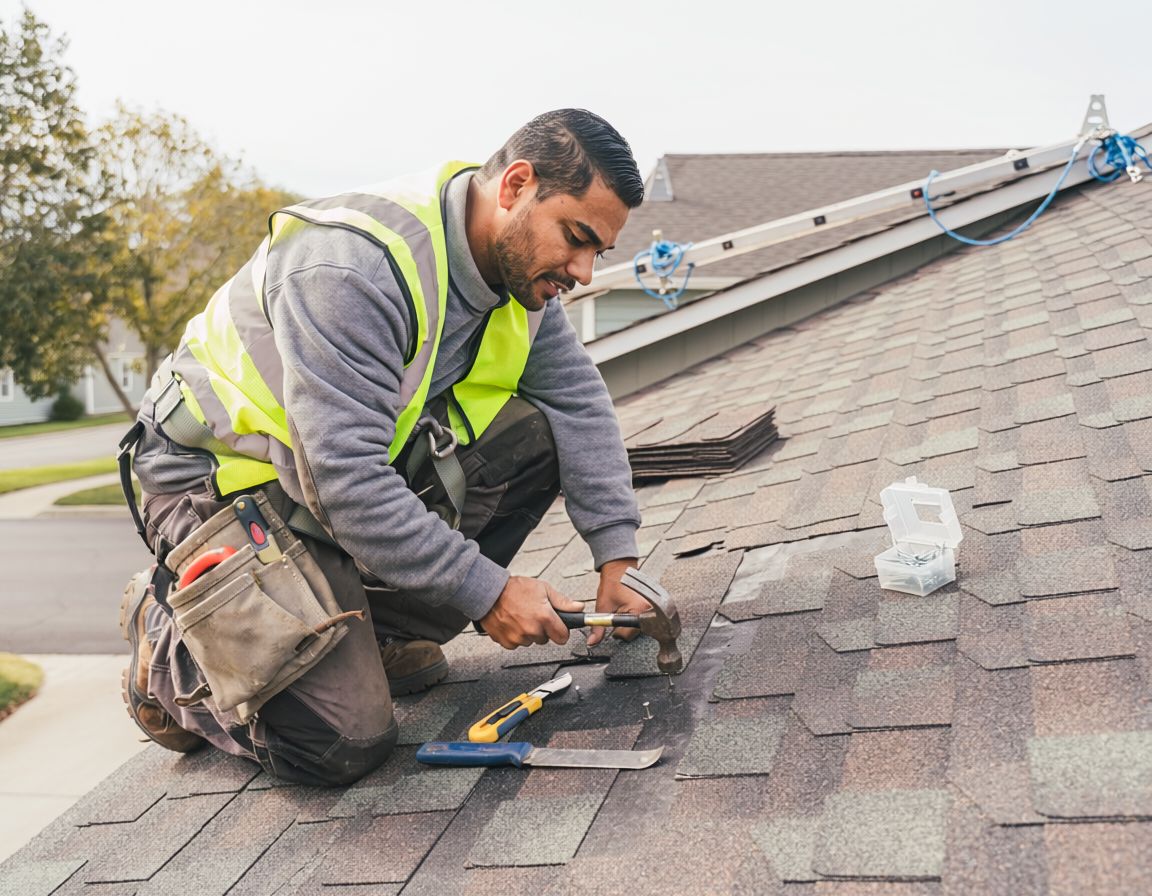
Before diving into the decision-making process, let’s clarify what each option entails. A roof patch involves repairing specific damaged areas—replacing a few shingles, sealing cracks, or reinforcing weak spots—without touching the rest of the structure. It’s like applying a bandage to a cut: effective for isolated injuries but not a cure-all for systemic issues. In contrast, a full replacement strips away the old layers and installs new materials from the deck up, providing a comprehensive reset that addresses underlying problems and incorporates the latest technologies.
Signs That a Patch Might Be the Right Move
Not every ding or dent warrants a complete overhaul. Patching shines when damage is contained, allowing you to extend your roof’s service without unnecessary disruption. Here are key indicators that a targeted fix could suffice:
First, consider the scope of the issue. If hail has dented a small section or wind has loosened a handful of shingles, a patch can restore functionality swiftly. Modern patching materials, infused with flexible polymers, adapt to temperature fluctuations better than ever, ensuring the repair withstands 2026’s unpredictable seasons. Contractors excel at matching these to your existing roof, creating an invisible mend that maintains aesthetic flow.
Age plays a role too. If your roof is relatively young—say, under a decade for asphalt shingles or 20 years for metal—a patch preserves the remaining life without prematurely discarding good material. This approach is particularly appealing for homes with recent installations, where the underlying structure remains sound. Professionals assess this by inspecting the decking and underlayment, confirming that a patch won’t mask deeper concerns.
Minor leaks or isolated wear, often from tree branches or foot traffic during maintenance, are prime candidates for patching. With advancements like liquid-applied sealants that cure in hours, contractors can address these efficiently, preventing water intrusion while you continue daily life uninterrupted. This method not only saves effort but also aligns with sustainable practices by reducing waste— a growing priority in 2026’s eco-conscious building trends.
However, patching’s success hinges on expert evaluation. Contractors use tools like infrared cameras to detect hidden moisture, ensuring the fix is thorough and preventing recurrence. Their involvement turns a simple repair into a durable solution, reinforcing why trusting pros is the smart path forward.
Red Flags Signaling It’s Time for a Full Replacement
While patches have their place, certain scenarios demand a complete replacement to avoid compounding issues. Ignoring these signs can lead to cascading problems, from interior damage to compromised energy efficiency. Here’s how to spot when it’s time to go all-in:
Extensive damage is a clear trigger. If more than a third of your roof shows wear—like widespread granule loss on asphalt shingles or rust on metal—a patch won’t provide uniform protection. In 2026, with storms intensifying, replacements incorporating reinforced cores offer superior resilience, distributing stress evenly across the surface. Contractors map out these areas during inspections, recommending replacements that upgrade your home’s defenses holistically.
Age and material fatigue often tip the scales. Asphalt roofs typically last 15-30 years, while wood shakes span 20-40; if yours is pushing these limits, deterioration accelerates. Curling edges, brittle surfaces, or persistent leaks signal systemic breakdown. A replacement introduces fresh, innovative materials—like those with built-in algae resistance or enhanced thermal barriers—that outperform aging ones, especially in variable climates.
Structural concerns amplify the need. Sagging ridges or uneven planes suggest underlying rot or inadequate support, issues patches can’t resolve. Replacements allow contractors to reinforce the framework, integrating modern ventilation systems that prevent future moisture buildup. This not only fixes the visible but fortifies the invisible, ensuring your roof supports your home’s overall stability.
Frequent repairs are another telltale sign. If you’re calling in fixes multiple times a year, the cumulative hassle and potential for overlooked damage make replacement the wiser choice. Contractors analyze repair history during consultations, advocating for replacements that eliminate recurring headaches with durable, low-maintenance designs.
In all these cases, professional contractors are indispensable. They conduct comprehensive audits, using drones for safe, detailed views and advising on integrations with elements like siding or windows. Their expertise ensures the replacement aligns with 2026 standards, from energy codes to aesthetic trends, delivering a roof that’s built to endure.

Key Factors to Weigh in Your Decision
Beyond signs, several factors influence whether to patch or replace, helping you align the choice with your home’s unique context.
Your home’s architecture matters too. Complex roofs with multiple angles benefit from replacements that ensure uniform coverage, while simpler designs might tolerate strategic patches. Contractors evaluate this, recommending solutions that enhance flow with adjacent features, such as coordinating shingle textures with siding profiles for visual cohesion.
Lifestyle and future plans play in. If you’re staying put, a replacement invests in decades of reliability; for shorter horizons, a patch maintains appeal without overcommitment. However, even short-term, pros advise considering resale—replacements often boost market value, as explored in roofing’s impact on home worth.
Energy efficiency is a growing consideration. Patches preserve existing insulation, but replacements allow upgrades like reflective barriers that cut cooling needs, synergizing with window efficiencies for lower utility demands.
Finally, professional input is the linchpin. Contractors bring objective assessments, using tools like moisture meters to uncover hidden truths. Their guidance ensures your decision is informed, avoiding regrets and maximizing your roof’s potential.
| Factor | Repair/Patch | Replace |
|---|---|---|
| Roof Age | Under 15 years | Over 20 years (asphalt) |
| Damage Scope | Less than 30% of roof surface | More than 30% of roof surface |
| Leak Frequency | One isolated leak | Multiple or recurring leaks |
| Deck Condition | Sound, no rot or sagging | Rot, sagging, or structural issues |
| Shingle Condition | Localized missing or damaged shingles | Widespread curling, cracking, granule loss |
| Repair History | First or second repair | Third+ repair in recent years |
| Storm Damage | Isolated impact area | Widespread hail or wind damage across multiple slopes |
| Insurance | Small claim or out-of-pocket repair | Full roof covered under storm damage claim |
| Budget | $500-$3,000 | $15,000-$25,000 (typical MN home) |
| Your Plans | Selling within 1-2 years, roof passable | Staying long-term or selling with a major issue |
When a Roof Repair Makes Sense
A repair is the right call when the damage is limited, the rest of the roof is in good shape, and fixing the problem doesn’t just delay the inevitable. Here’s when we recommend repair over replacement:
Isolated storm damage on a newer roof. If your roof is under 15 years old and a storm knocked off a few shingles or cracked a pipe boot, a repair is straightforward. We replace the affected shingles, re-seal the flashing, and the roof continues performing as designed. The key is that the rest of the roof is solid — no widespread granule loss, no curling, no soft spots on the deck.
A single leak with a clear source. Leaks caused by cracked pipe boots, failed flashing around a chimney, or a small area where shingles lifted during a wind event are common repairs. These are localized problems with localized fixes. We identify the source, repair it, and verify the deck underneath hasn’t taken moisture damage. Most of these take a few hours.
Minor wear in one area. Maybe a tree branch rubbed on one section, or foot traffic during HVAC maintenance dislodged some shingles. If the damage is contained to a small area and the rest of the roof looks clean, we patch it and move on.
You’re selling soon and the roof is passable. If you’re putting your home on the market within a year and the roof has minor issues but isn’t failing, a targeted repair can address inspection concerns without the cost of a full replacement. But be honest with yourself — if the roof has multiple problems, a buyer’s inspector will find them all.
The math doesn’t justify replacement. If a $500-$1,500 repair buys you 5+ more years of reliable performance, that’s a good investment. If the same repair only buys you 6-12 months before the next problem shows up, you’re wasting money.
When You Need a New Roof
Replacement is the right call when the problems are systemic — meaning the roof as a whole has reached the end of its useful life, not just one spot. Here’s when we tell homeowners it’s time:
Your roof is 20+ years old and showing multiple symptoms. On a standard asphalt shingle roof, once you’re past 20 years and seeing granule buildup in your gutters, curling edges, cracked shingles, and daylight in the attic, the roof is telling you something. Individual repairs at this stage are just buying time on a system that’s deteriorating everywhere, not just where you can see it.
Damage covers more than 30% of the roof. After a major hail or wind event, if the adjuster’s report shows damage across multiple slopes and elevations, a repair won’t restore uniform protection. At that point, replacement is usually covered by insurance anyway.
The deck is compromised. If we get up on the roof and the sheathing feels soft, spongy, or shows signs of rot, the damage goes deeper than the shingles. You can’t just patch over a rotting deck — it needs to be cut out and replaced, and once you’re doing that level of work, replacing the entire roof surface makes more financial sense.
You’re on your third or fourth repair in recent years. Every contractor in this business has seen homeowners who’ve spent $5,000 in repairs over three years and then need a $18,000 replacement anyway. If you’re calling a roofer every year, the cumulative cost is eating into what a new roof would have given you from day one — with a warranty.
Sagging, uneven rooflines, or visible structural issues. These are not cosmetic. Sagging indicates either deck rot, inadequate support, or long-term moisture damage to the framing. Patching the surface over a structural problem is dangerous. Replacement allows us to tear everything down to the deck, identify the root cause, and fix it properly.
Your energy bills keep climbing. An aging roof with degraded underlayment and poor ventilation lets heat escape in winter and bake your attic in summer. A full replacement lets us install modern synthetic underlayment, proper ice and water shield along the eaves, and balanced ridge-to-soffit ventilation that actually regulates attic temperature year-round.
How Insurance Affects the Repair vs Replace Decision
In Minnesota, storm damage is the number one reason homeowners end up with a new roof. If hail or wind caused the damage, your homeowners insurance policy typically covers repair or replacement minus your deductible — and in many cases, the adjuster’s assessment determines which one you get.
Here’s how it usually works: if the damage is limited to a small area, the adjuster will scope a repair. If damage is found across multiple slopes and affects more than about 30% of the roof, most adjusters will approve a full replacement. This is why having your contractor present during the adjuster inspection is critical — they can identify damage patterns the adjuster might miss, especially on hail impacts that aren’t visible from the ground.
One mistake homeowners make is getting a repair approved when the damage actually justified a replacement. Once the claim is closed, reopening it for additional damage is harder. If you suspect your roof took widespread storm damage, get a professional inspection before calling your insurance company. Your contractor can document the full scope and ensure nothing gets left off the claim.
We handle hundreds of insurance claims across the Twin Cities every year. If you’re not sure whether your damage qualifies for a repair or replacement claim, call us first — we’ll inspect and give you an honest answer before you involve your insurer.
Roof Repair vs Replacement Cost in Minnesota
For Minnesota homeowners, here’s what to expect in 2026:
Repairs typically range from $300 to $3,000 depending on scope. A few replacement shingles and re-sealed flashing might run $300-$800. A more involved repair covering a larger area with deck work could run $1,500-$3,000.
Full roof replacement on a typical Twin Cities home ranges from $15,000 to $25,000 for architectural asphalt shingles. This includes complete tear-off, deck inspection and repair, new synthetic underlayment, ice and water shield on eaves and valleys, new shingles, flashing, ridge vents, and pipe boots. Metal roofing projects run $18,000 to $30,000+.
The real cost question isn’t “which is cheaper today?” — it’s “which costs less over the next 10 years?” A $1,500 repair on a 12-year-old roof in good condition is a great investment. The same $1,500 on a 22-year-old roof that needs two more repairs next year is money down the drain.
(Pricing updated for 2026.)
Repair vs Replace in Minnesota’s Climate
Minnesota’s weather makes this decision more consequential than in milder climates. Here’s why:
Freeze-thaw cycles accelerate damage. A small crack or exposed area that might last years in Arizona will get worse fast here. Water enters, freezes, expands, and opens the damage further. What starts as a $500 repair in October can become a $3,000 problem by April if left through a Minnesota winter.
Ice dams compound the risk. If your roof has patched areas with imperfect sealing, ice dams can force water underneath at those exact points. A full replacement with proper ice and water shield along the eaves provides much better protection against ice dam intrusion than patched areas that may not have the same membrane coverage.
Storm season creates urgency. Minnesota’s hail and wind events typically hit between May and August. If your roof is already compromised going into storm season, additional damage can compound rapidly. We see homeowners every year who skipped a recommended replacement in spring and ended up with interior water damage after a summer storm.
Short repair windows. Our installation season runs roughly April through November. If your roof needs attention, addressing it before winter is critical. Emergency winter repairs are possible but more difficult and more expensive. Planning ahead gives you more options and better pricing.
Making the Call: When in Doubt, Consult the Experts
Deciding between patching and replacing boils down to assessment, but doubt often lingers. That’s where contractors shine—they provide unbiased evaluations, using experience to weigh pros and cons specific to your roof.
Their inspections reveal nuances, like subtle granule erosion or ventilation flaws, guiding you toward the best path. By involving pros early, you avoid missteps, ensuring work that’s efficient, compliant, and tailored.
In the Minneapolis-St. Paul greater metropolitan area and throughout Minnesota, Presidential Construction in Maple Grove stands ready to assist with your roofing dilemmas. Our team specializes in assessments and solutions that prioritize your home’s needs. Give us a call at (651) 766-3464 or contact us to explore your options—let’s determine the ideal approach together.
Commonly Asked Repair vs Replacement Questions
Can a roof be repaired instead of replaced?
Yes — if the damage is isolated, the roof is under 15-20 years old, and the underlying deck is sound, a repair can restore full functionality and buy you years of additional life. The key is having a professional determine whether the damage is truly localized or part of a larger pattern of deterioration that a repair can’t solve.
How do I know if my roof needs to be replaced?
The most reliable signs are widespread granule loss in your gutters, curling or cracked shingles across multiple areas, recurring leaks, sagging rooflines, and a roof age over 20 years for asphalt shingles. If you’re seeing more than one of these, replacement is almost always more cost-effective than continued repairs.
Is it worth repairing a 20-year-old roof?
It depends on the overall condition. If the rest of the roof looks solid and the problem is truly isolated — like a cracked pipe boot or wind-damaged shingles in one area — a repair can be worthwhile. But if you’re seeing widespread aging symptoms alongside the specific damage, you’re likely better off replacing. A $1,500 repair on a roof that needs replacement in two years isn’t a good investment.
Does insurance cover roof repair or replacement?
If the damage was caused by a covered event like hail, wind, or a fallen tree, your policy typically covers whichever is warranted — repair or replacement — minus your deductible. The adjuster determines the scope based on the extent of damage. Having your contractor present during the inspection ensures the full damage is documented and nothing gets missed.
How much does it cost to repair a roof in Minnesota?
Roof repairs in Minnesota typically range from $300 to $3,000. Simple shingle replacements and flashing repairs fall on the lower end. More extensive repairs involving deck work or larger areas run higher. A full replacement on a typical Twin Cities home costs $15,000 to $25,000 for architectural asphalt shingles.
Should I repair my roof before selling my house?
If the issues are minor — a few missing shingles, a small patched area — a repair may be sufficient to pass inspection. But if the roof has widespread problems, a buyer’s inspector will flag it, and you’ll either negotiate a price reduction or pay for a replacement before closing. In competitive markets like the Twin Cities, a new roof removes a major objection and can accelerate the sale.
Can I patch part of my roof and replace the rest later?
Technically yes, but it’s rarely the best approach. Patched areas create transition points where old meets new, and these seams are vulnerability points for leaks and ice dam intrusion. If more than 30% of your roof needs attention, replacing everything at once gives you uniform protection, consistent warranty coverage, and a better-looking result.
How long does a roof repair last?
A well-executed repair on a sound roof can last the remaining life of the roof — potentially 10-15+ years if the underlying system is in good shape. A repair on an aging, deteriorating roof might only buy 1-3 years before the next problem appears. The longevity of the repair depends entirely on the condition of everything around it.